
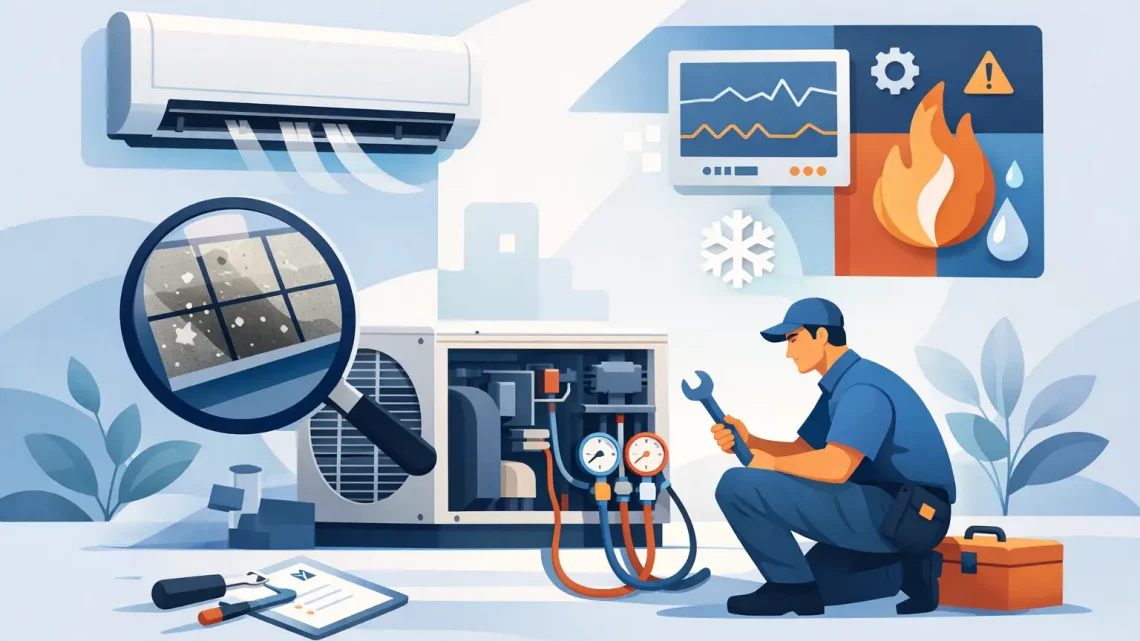
When Does Your Aircon Service Need More?
25/07/2026A warm bedroom at 11pm, water dripping from a wall unit, or one room that never seems to cool properly – these are not problems to ignore until the next school holiday. A proper aircon service keeps your system comfortable, but it also gives you an early warning when a small fault is becoming an expensive repair.
For Singapore homes, air-conditioning works hard almost every day. Dust builds up, drain lines collect slime, filters restrict airflow and components wear over time. The right answer is not always the most intensive service. It depends on what your unit is doing, how long it has been since its last appointment and whether the problem affects one indoor unit or the whole system.
What a routine aircon service should do
General servicing is the sensible starting point for a working air-conditioner that needs regular care. A technician should clean the filters and accessible parts, check airflow, inspect the drainage arrangement, test basic operation and look for visible signs of wear or leakage. The goal is straightforward: allow the unit to move clean air freely, drain condensation properly and cool without working harder than necessary.
For most households, servicing every three to four months is a practical rhythm. A home with pets, renovation dust, heavy daily use or several family members working from home may need attention more often. A lightly used guest room may not. The key is to service according to real use, not simply because a calendar reminder says so.
If you have a multi system arrangement, ask for every indoor fan coil unit to be checked. One neglected bedroom unit can develop a drainage or airflow problem while the others still appear perfectly fine. The outdoor condenser also matters: it is where heat is released, and restricted airflow or damaged components there can affect the performance of the entire system.
Signs your aircon service needs to become a repair
Regular cleaning cannot fix every cooling complaint. When the air-conditioner is running but the room remains warm, the cause could be low refrigerant, a faulty sensor, a worn capacitor, a dirty coil, a compressor issue or a fault in the control board. These require diagnosis, not guesswork.
Pay attention if the unit trips the circuit breaker, makes a new rattling or screeching noise, gives off a burning smell, leaks water repeatedly or switches itself off. Weak airflow is another warning sign, especially when the fan speed is set high but little air reaches the room. In an inverter system, unusual cycling or a sudden rise in electricity use can also point to a developing problem.
Gas top-ups deserve particular care. Refrigerant does not get used up like fuel. If the gas level is low, there is usually a leak somewhere in the system. Topping up without finding the leak may give temporary relief, but the cooling can fade again and the money spent is wasted. A proper inspection should identify the likely source, explain the repair and then confirm that the system is cooling correctly.
This is the difference between treating a symptom and treating the cause. COOLSERVE approaches faults with the same principle: diagnose first, recommend clearly, then carry out only the work your unit actually needs.
When chemical servicing is worth considering
Chemical servicing is not a routine upgrade for every appointment. It is a deeper clean used when dirt and biological build-up have become severe, or when normal servicing has not resolved poor cooling, unpleasant odours or recurring drainage trouble.
During a chemical service, key parts such as the fan coil and evaporator coil are cleaned thoroughly to remove stubborn grime that restricts heat exchange. Our chemical service will dismantle all parts and components for a complete wash. It can restore performance when a badly clogged indoor unit is the issue, but it will not repair an electrical fault, a damaged compressor or a refrigerant leak.
There is a trade-off. A chemical service is more involved than general maintenance, so it should be recommended for a reason, not as a default add-on. Ask what the technician found, which component is affected and why normal cleaning is unlikely to be enough. Clear answers help you make a decision with confidence.
Water leaks are usually a drainage problem – but not always
A puddle beneath the indoor unit is one of the most common reasons people call for help. In many cases, the drain pipe is blocked by algae, dust or accumulated sludge. Condensation cannot flow out, so it backs up and spills into the room. Early action matters because repeated leaking can stain walls, damage flooring and affect built-in wardrobes or false ceilings.
However, a leak can also come from poor installation gradient, damaged insulation, a cracked drain pan or a frozen coil caused by restricted airflow or low refrigerant. If cleaning the drain line has not stopped the problem, do not keep placing a bucket underneath. Request a diagnostic inspection so the actual source can be checked.
Service frequency for homes, rentals and businesses
A three months or quaterly schedule suits many occupied homes, particularly where air-conditioning is used overnight. Landlords should consider servicing before a new tenant moves in, then agree on a clear maintenance routine. It protects the property, gives tenants a comfortable start and reduces arguments over whether a fault was pre-existing.
For restaurant, cafés, retail spaces, food preparation areas and offices, maintenance needs are often more frequent usually monthly service is required. Longer operating hours, grease, footfall and heat-generating equipment place greater demand on the system. A failed unit can affect customers, staff comfort and stock, so an annual maintenance contract can be the more predictable option.
New homeowners should not wait for a problem either. After a new installation, use the system normally and note any uneven cooling, vibration, water marks or unusual noise during the first few weeks. It is much easier to address an installation concern promptly than after furniture, carpentry and curtains make access difficult.
How to choose an aircon service company
How long has the company being establised. How many permanent stuffs do they have and are they authorised dealer for your brands of air con.
Price matters, but the cheapest advertised visit can become costly if essential checks are skipped or extra work is presented without explanation. Look for published pricing, a clear description of what is included and a technician who can explain findings in plain language.
A reliable provider should also respect your home. That means arriving within the agreed time where possible, protecting the work area, cleaning up after the job and testing the unit before leaving. For repairs, ask about workmanship and parts warranty. A warranty does not prevent every future fault, but it shows the company is prepared to stand behind its work.
It is also sensible to ask whether a free inspection is available before committing to major repair or replacement. If an ageing unit needs repeated gas top-ups, major parts and intensive cleaning within a short period, replacing it with an efficient inverter model may be better value. The right decision depends on the unit’s age, condition, repair cost and how many hours it runs each day.
A few habits that help between visits
You do not need technical skills to look after your air-conditioner. Clean or wash the user-accessible filters regularly, keep doors and windows closed while cooling a room and avoid setting an extreme temperature just to cool faster. A moderate setting is usually more comfortable and less demanding on the system.
Leave space around indoor and outdoor units where possible, and do not ignore small changes in sound, smell or cooling strength. Taking action when the first warning appears is usually simpler than waiting for a complete breakdown on the hottest night of the month.
Your air-conditioner should quietly do its job, not become another household worry. When it does not feel properly cool, arrange an inspection early and expect a clear explanation before any work begins.